Mubert coupon code searches usually mean you want royalty-free music for YouTube, ads, or client work—without paying full price or trusting random “verified” strings. As of March 2026, I couldn’t confirm a universal public code that’s always active, but Mubert does offer built-in savings (like annual billing) and occasional official promos. This guide focuses on verifiable ways to save and the licensing details that matter when you publish.
If you’re a video editor racing deadlines, a podcaster who needs consistent background beds, or a marketer producing paid social, the steps below will help you apply real discounts (when available) and avoid checkout surprises.
-
Reviews
-
Last Used
-
Date Ends
-
Type
-
country
-
Date Added
Here’s the boring truth about Mubert pricing: most “coupon codes” online aren’t worth the paste. As of March 2026, your best savings come from choosing the right license for how you publish, and only upgrading when the workflow is proven.
You edit YouTube videos weekly.
You ship paid ads for clients.
You need podcast-safe beds on repeat.
Your checkout may differ depending on whether you buy a subscription or a single-track (perpetual) license. This isn’t magic… pricing + policy. Start from official buttons. No magic, just math. Two quick micro-checks I look for on the official pricing page: the annual toggle explicitly says “Save up to 25%,” and a disclaimer near the top states that all payments are non-refundable. If you want to compare what’s live right now through an official path, use this Mubert deal link and cross-check the totals on mubert.com before you commit.
Mubert coupon code status
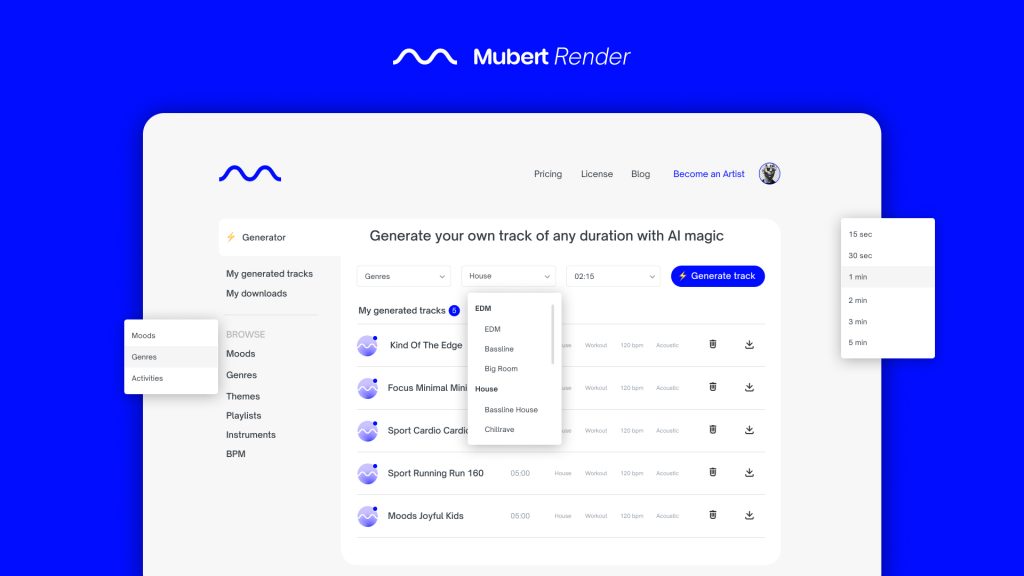
Mubert Render is built for creators who want royalty-free music that fits a mood, genre, and duration—fast. When people search “Mubert coupon code,” they usually want a lower price on the license that removes friction: commercial use, higher quality downloads, and fewer attribution/watermark limitations.
As of March 2026, I can’t verify a single, always-on public coupon code that Mubert promotes for everyone at all times. That doesn’t mean discounts never happen; it means the safest approach is to treat codes as optional and plan-fit as the real lever. Banners change, but usage patterns rarely do.
Best for: YouTube creators, agencies, and podcasters who need predictable royalty-free background music, want quick generation by mood/genre, and need licensing paperwork that’s easy to show when platforms ask questions.
Not ideal for: artists trying to release tracks to Spotify/Apple Music as “their own,” or anyone who expects generous refunds after licensing music for commercial projects.
Check with a professional first if: you’re running large paid campaigns, sublicensing to users, or you need legal review of music licensing language for your client contracts.
Rule of thumb: if your channel or client work is monetized, buy the license that matches monetization upfront—then you don’t spend your weekend disputing claims later.
Best ways to save (no-code)
Pay for the workflow you’ll actually repeat. The most reliable savings usually come from (1) picking the right usage rights, (2) choosing subscription vs single-track licensing intentionally, and (3) upgrading only after you’ve tested your real publishing flow.
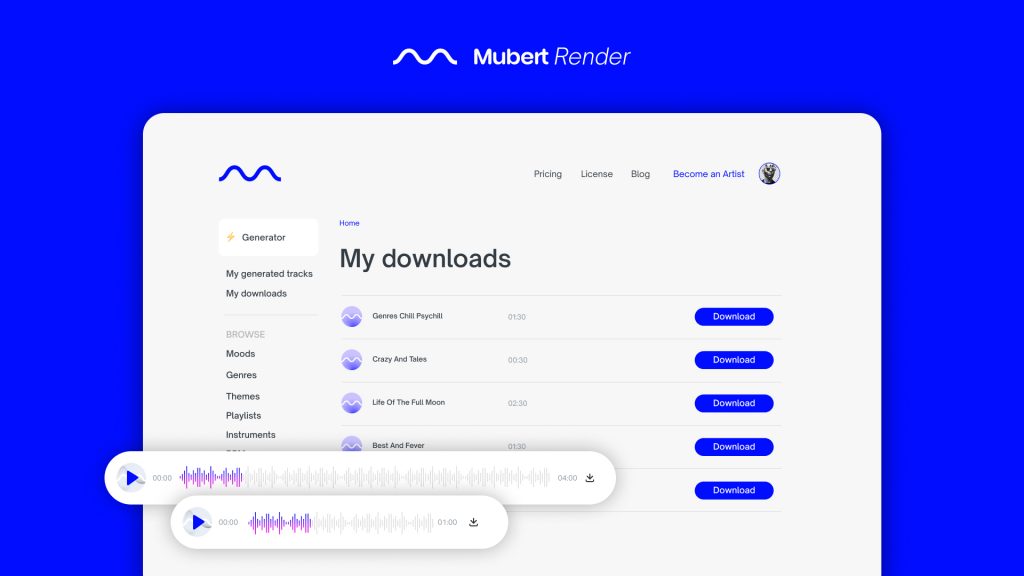
- Use the free tier for drafts when attribution/non-commercial rules fit your situation, then upgrade only for monetized or client-facing publishing.
- Switch to annual billing only after proof you’ll keep using Mubert across multiple projects (annual savings can be real, but only if you renew).
- Choose single-track licenses for one-offs when you just need one specific piece for a campaign and don’t want ongoing subscription overhead.
- Reduce wasted generations by saving a prompt template (mood + genre + instrumentation + BPM range + “no vocals” if needed) and iterating in small steps.
- Batch your music work (generate 10–20 candidate tracks in one session), then pick winners for your next few uploads so you’re not re-opening the tool every day.
One practical tip that saves money fast: decide whether you need “background bed” music or “hero track” music. Background beds are easier to standardize and reuse, which often means you can stay on a smaller plan longer without sacrificing production quality.
How to apply a promo (steps)
Treat licensing like a contract, not a vibe. If you receive a legitimate promotion from Mubert or a verified partner campaign, apply it during the upgrade/checkout flow and verify the updated total before paying. If the checkout template changes, this may change.
- Start from an official page (mubert.com) or a partner link you trust so the offer attaches to the correct account.
- Pick your license path: subscription (ongoing generation + licensing) vs single-track/perpetual licensing for one-off projects.
- Look for a promo/discount field during checkout, paste the code exactly as provided, and confirm it applies to your selected billing cadence.
- Verify the order summary (what you’re buying, how long it lasts, and what’s allowed), then save the invoice/receipt.
Test one track first. That small habit catches most problems early: wrong license type, wrong output format, or a code that only applies to a different plan.
Code fail checklist
When a code doesn’t work, it’s usually eligibility, not typos. Discounts fade fast, but your license paperwork stays. Run this checklist once, then stop guessing.
- Plan mismatch: the promo may apply only to a specific plan tier or only to annual billing.
- Account status: new-user-only or first-purchase-only restrictions are common for SaaS-style promos.
- Non-stackable discounts: annual savings or campaign pricing may block an additional code.
- Wrong product: the code might apply to a different Mubert product (Render vs API vs Business licensing).
- Campaign window ended: short promo periods and redemption caps happen, even when a third-party site still lists the code.
- Checkout path changed: subscription vs single-track licensing can route you through different billing screens.
If a code came from an official email or landing page and still fails, contact support with the promo source and ask for the exact eligibility rule blocking it. That answer is more valuable than trying ten random strings.
Pricing/bundles + refund/trial reality check
Mubert’s pricing has two decisions that matter more than any coupon: (1) subscription vs one-time licensing, and (2) personal/non-commercial vs commercial/client usage. The “right” plan is the one whose permissions match how you publish.
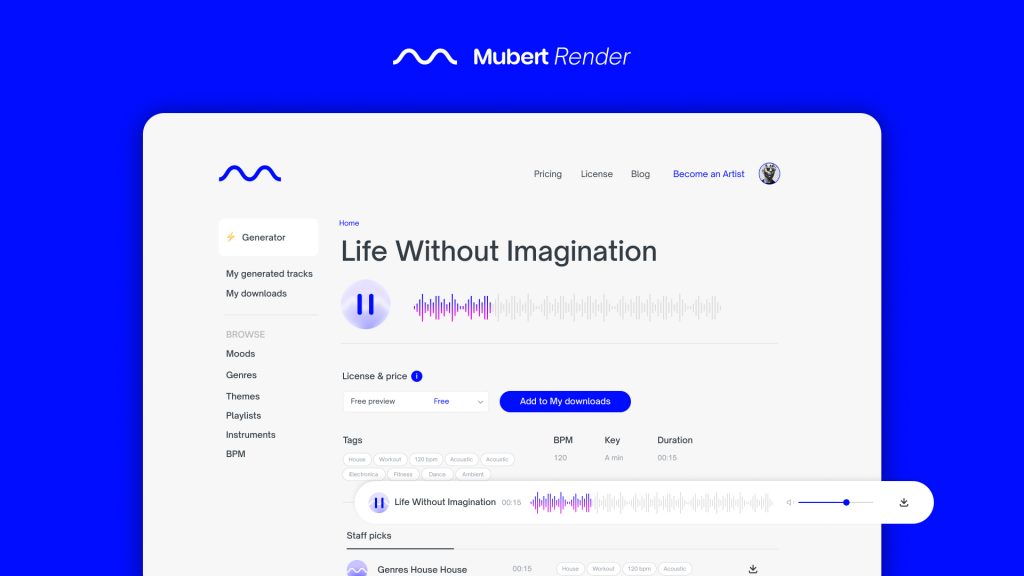
Mubert’s own blog describes a basic/free approach that allows use with attribution, while paid plans are positioned for commercial rights and cleaner outputs without watermarks. In older product explanations, Mubert described the free Ambassador tier as allowing limited monthly generations (for example, a capped number of MP3 tracks for non-commercial use with attribution), then higher tiers that remove attribution requirements and expand commercial usage—so the safest move is to confirm today’s exact limits inside your account before you commit to a longer billing cadence.
I first assumed the only way to save was finding a big coupon, then realized the bigger lever is choosing the correct license level for how you monetize. If you’re monetized today, paying for the right license is often cheaper than losing a week of revenue to a claim or takedown dispute.
Refund reality check: Mubert makes its refund stance clear on the pricing page, so treat purchases like licensing decisions, not like retail shopping. Also note that Mubert’s disclaimers include restrictions around how tracks can be used (for example, limitations related to Content ID registration and distributing tracks as standalone music to streaming services), so read those rules before you build a whole channel format around one workflow.
Banners change, but usage patterns rarely do. Before you upgrade, write down your real use case in one line: “I publish monetized YouTube videos weekly,” or “I make paid ads for clients,” or “I need background beds for a podcast network.” Then buy the smallest plan whose permissions match that sentence.
Seasonality
Promos in creator tools tend to show up around predictable moments—holiday shopping season, product launches, and occasional creator campaigns. Shop based on your upload calendar, not theirs. The “best time” to buy is usually right before a production sprint, when you’ll actually use the plan enough to justify the cost.
If you’re running a channel or client pipeline, a practical approach is to check official pricing during a slow week, set a reminder for major creator seasons, and keep your workflow ready so you can take advantage of an official promo if one appears—without rushing into the wrong tier.
Alternatives
If Mubert isn’t the right fit, compare alternatives based on licensing clarity, catalog quality (or generation quality), and how fast you can ship a finished video without worrying about usage rights.
- Epidemic Sound for a large curated catalog and creator-focused licensing workflows.
- Artlist if you prefer a subscription library model with broad creative assets.
- Soundraw for AI-assisted track creation with editing controls.
- Beatoven.ai for mood-based generation aimed at video creators.
- Soundful for fast AI generation with different genre presets and creator workflows.
Keep the comparison fair: generate or pick 5 tracks for the same project, test how licensing proof looks, then choose the tool that your future self will still understand six months later.
FAQs + operator notes
Q: Is there a Mubert coupon code that always works?
A: As of March 2026, I couldn’t confirm a universal, always-on public code. Real discounts are more often official campaigns, partner offers, or built-in pricing levers like annual billing savings.
Q: What’s the fastest way to save without a code?
A: Choose the smallest license level that matches your publishing rights (non-commercial vs monetized vs client work), and consider annual billing only after you’ve proven you’ll keep using Mubert.
Q: Can I use free Mubert tracks on YouTube?
A: Mubert’s own content explains that the basic/free approach can require attribution and may be limited to non-commercial contexts, while paid plans are positioned for commercial rights without watermarks. If you monetize, verify the license level for monetization before publishing.
Q: Where do I enter a promo code?
A: Usually during upgrade/checkout. If you don’t see a promo field, you may be on a different checkout path (subscription vs single-track licensing) or the promotion may be limited to specific tiers.
Q: What if my promo code fails?
A: Check tier and billing cadence first (annual-only promos are common), then account eligibility (new customer only) and stacking rules. If the code came from an official page/email, ask support for the eligibility rule blocking it.
Q: What should I save for proof of licensing?
A: Save your invoice/receipt and the license/plan description you purchased. If a platform asks questions later, the paperwork is the easiest way to resolve it quickly.
Operator notes: Last checked: March 2026. Verified on official Mubert sources: the pricing page shows an annual savings note (“Save up to 25%”) and a non-refundable payments disclaimer; Mubert’s blog describes free/basic usage with attribution and paid-plan positioning for commercial rights without watermarks, and older product explainers describe tier differences (e.g., Ambassador vs Creator vs Pro) as a licensing/usage progression. Not verified: any third-party coupon strings, “verified code” claims, or discount percentages not shown on Mubert’s own pages.
