Synder coupon code hunters usually want one simple thing: pay less for accounting automation without falling for sketchy “verified” coupons. As of March 2026, I couldn’t confirm a universal, public code on Synder’s main pricing page, but Synder does run occasional partner and campaign promos—so the smartest move is to check official signup paths first, then use the trial to prove fit.
You’re likely here because you sell on Shopify/Stripe and hate reconciliation, you run multichannel payouts, or you’re an accountant managing client books. Below is how to spot legit discounts, apply a promo, and save even if you never find a working code.
-
Reviews
-
Last Used
-
Date Ends
-
Type
-
country
-
Date Added
As of March 2026, this Synder coupon code page focuses on the only discounts that matter: the ones you can actually apply without guessing. Here’s the boring truth. If you’re a Shopify or Stripe seller cleaning up payout messes, you’re in the right place.
If you’re an accountant juggling multiple client ledgers, you’re in the right place.
If you’re migrating away from CSV imports into QuickBooks or Xero, you’re in the right place too.
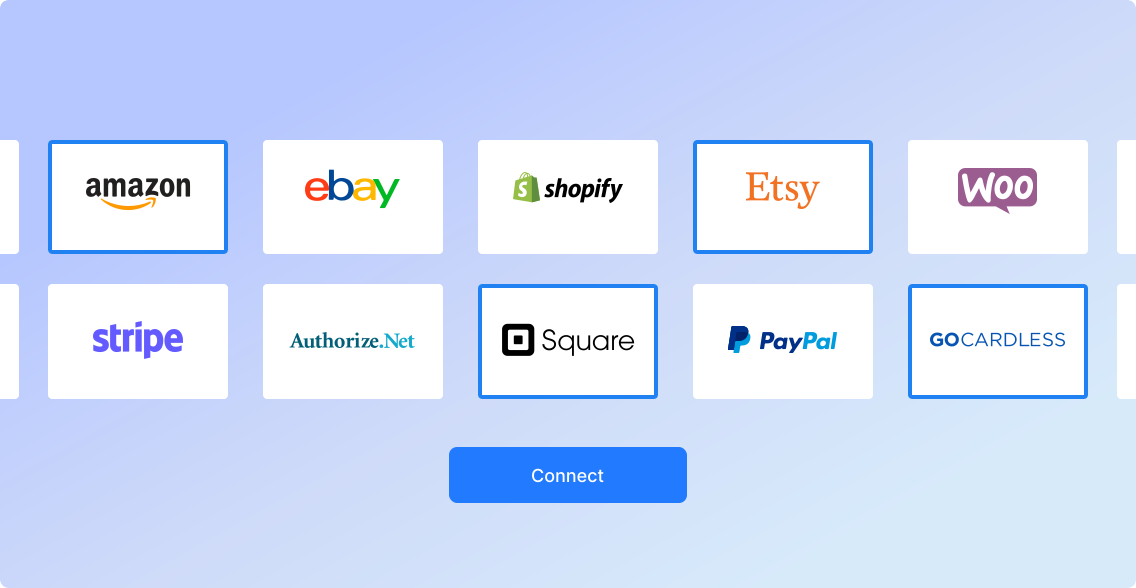
Your checkout may differ depending on your region, plan tier, and whether you’re upgrading from the trial or talking to sales. This isn’t magic—it's just pricing + policy. On the official Synder pricing page, the main “Get started” buttons route through go.synder.com, and the same page states Synder currently accepts credit card payments for all subscriptions. If you want to see what Synder is offering through official signup paths right now, use this Synder deal link and compare it to what you see on synder.com.
Synder coupon code status
Synder is accounting automation software that connects payment processors and sales channels to accounting platforms, aiming to reduce manual reconciliation. When people search “Synder coupon code,” they usually want a clean, public discount they can paste once and move on.
As of March 2026, I can’t verify a single, sitewide coupon code that’s publicly promoted on the main pricing page for everyone at all times. What I can verify is that Synder pushes an evaluation-first approach (trial, demos, and partner programs), and that promotions sometimes exist through partner campaigns or event pages. Start from official buttons, not random coupon widgets.
If a third-party site claims “56 verified codes,” treat it as entertainment until you can trace the offer back to Synder, a Synder partner, or an email you received directly from Synder. If it feels too good, it probably is.
Best for: businesses syncing high volumes from Stripe/Shopify/marketplaces into QuickBooks, Xero, or an ERP; teams that want fewer spreadsheet handoffs; accountants who need consistent posting rules.
Not ideal for: very low-volume sellers who only need a monthly summary entry; teams that require a generous refund window after purchase; setups where every platform is custom and unsupported.
Check with a professional first if: you’re changing revenue recognition methods, you’re mid-audit, or you need to confirm how taxes/fees should be categorized in your jurisdiction.
Rule of thumb: if Synder reliably saves you at least 30–60 minutes per month-end close, the subscription cost is usually easier to justify than another week of manual cleanup.
Best ways to save (no-code)
If you don’t have a working code in hand, you can still lower your effective cost. No magic—just math. The goal is to pay for the plan capacity you’ll actually use, for the billing cadence that matches your cash flow and reporting needs.
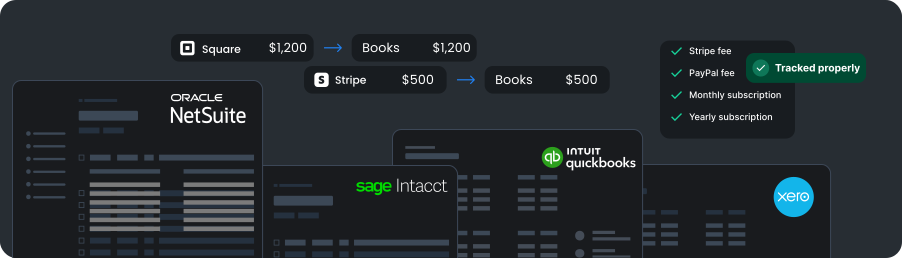
- Use the trial like a checklist (connect platforms, run a test sync, validate mapping rules, confirm reports)
- Prefer annual billing only after proving fit (annual options are often discounted vs monthly)
- Right-size by transaction volume so you’re not buying headroom you never touch
- Ask about accountant/partner pricing if you manage multiple client organizations
- Book a demo for complex setups when you need confidence on workflows before committing
A quick way to sanity-check value is to estimate what you currently spend on manual posting, reconciliation, and month-end review, then compare that to the plan you actually need—not the plan with the fanciest feature list. Treat the trial like an audit, not a demo.
If you’re high volume, the cheapest “savings” can be avoiding downtime: ensure your integrations are stable, your posting rules are consistent, and your reconciliation workflow matches your accountant’s expectations before you lock into a longer billing period.
How to apply a promo (steps)
When Synder promotions are available, they’re typically applied during plan selection or billing. The exact layout can change, but the flow below is the safest way to avoid fake code traps and accidental mismatches.
- Start from Synder’s official site or an official partner link, then create your account and begin the trial.
- In your Synder account, navigate to the subscription or billing area when you’re ready to choose a paid plan.
- Look for a promo/discount field during the upgrade step; enter the code exactly as provided (no extra spaces).
- Confirm the total before paying, then save the invoice/receipt for your records.
If you received a code from a webinar, partner newsletter, or campaign page, keep that source open while you check out so you can verify eligibility details like plan tier, billing cadence, and whether it applies to new accounts only.
When a code is legitimate but not applicable, the usual fix is not “try another code,” it’s “switch the plan/cadence to what the promo requires,” then decide whether that plan still makes sense for your workflow.
Code fail checklist
Even legitimate promo codes can fail for boring reasons. Screenshots can lie.
- The code is limited to a specific plan tier or billing cadence (monthly vs annual)
- The promotion is restricted to new accounts, first payment only, or specific regions
- You’re already on a discounted partner rate, so the code can’t stack
- The code was copied with an extra space, hidden character, or wrong letter case
- The promo expired or was replaced by a newer campaign
- Your account is on a sales-assisted or enterprise quote where codes aren’t used
If a code fails, don’t brute-force random strings. Re-check the original terms (email or campaign page), confirm the plan/cadence matches, and then ask support what eligibility rule is blocking it so you can decide whether it’s worth changing plans.
One more practical tip: if you’re comparing two options (a partner rate vs a coupon), write down the final totals in the same billing cadence so you’re not accidentally comparing a monthly price to an annual commitment.
Pricing/bundles + refund/trial reality check
Synder’s pricing is structured around plan tiers and transaction volume, so the “real” price you pay can depend on how many sales transactions you sync each month and which integrations you need. Don’t pay for features you won’t use.
That means you’ll save more by measuring your typical monthly transaction count than by chasing a flashy headline discount. If your business is seasonal, base your plan choice on your peak month, then review whether you can downgrade during slower periods without breaking your reporting workflow.
Synder highlights a 15-day free trial as the safest evaluation window, because you can connect your platforms, test summary vs per-transaction sync behavior, and confirm that fees, refunds, and payouts land where you expect in your ledger.
I first assumed Synder offered a standard money-back guarantee, then realized their help center states subscriptions are final and non-refundable. That policy makes it even more important to validate the full workflow during the trial and to keep a simple checklist of “must-have” outcomes before you upgrade.
Common “must-haves” include: accurate payout matching, predictable mapping rules, clean handling of refunds/chargebacks, and reporting that matches how your accountant wants to review month-end results. If the checkout template changes, this may change.
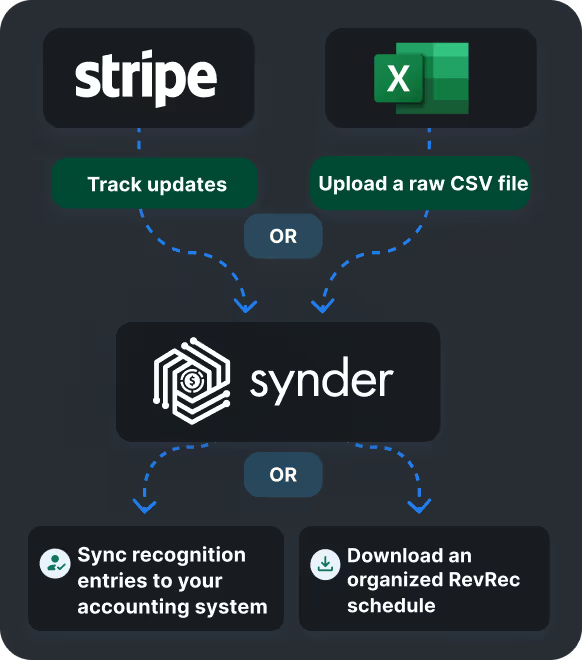
If you’re evaluating Synder for revenue recognition or more complex accounting workflows, consider involving your accountant early—especially if you’re switching methods, changing how you recognize subscription revenue, or preparing for an audit.
Seasonality
Synder discounts (when they happen) tend to follow the same pattern as most B2B SaaS: seasonal campaigns, partner events, and end-of-quarter pushes. Read the policy before you chase the price.
- Late-year and holiday periods (budget resets and annual planning)
- End of quarter (sales teams often run promos to hit targets)
- Accounting “busy season” messaging (when month-end pain is top of mind)
- Partner webinars or industry events (codes shared to attendees)
Because campaigns can appear and disappear without notice, the most dependable savings lever is plan-fit: transaction volume, required integrations, and whether annual billing makes sense for your cash flow once you’ve proven the workflow.
Alternatives
If Synder isn’t the right fit, these alternatives are commonly considered for ecommerce and payment-to-accounting automation. Renewals are where the real surprises like to hide, so compare cancellation terms as carefully as features.
- A2X — popular for marketplace and ecommerce accounting summaries, especially when you prefer settlement-based posting
- Link My Books — focused on ecommerce integrations with strong posting rules and tax/VAT considerations
- PayTraQer — connects payment processors and ecommerce platforms to QuickBooks, with different sync approaches
- Bookkeep — designed for automated daily summaries and simplified reconciliation in QuickBooks/Xero
- Manual workflow + accountant rules — for low volume, a consistent monthly journal entry process can be enough
Choosing between these is less about “best app” and more about your posting philosophy: summary vs per-transaction, how you want fees and refunds handled, whether you need granular line items, and how much flexibility you require as channels change.
If you’re on the fence, use the trial to recreate one “real month” of data, then compare how each tool presents reconciliation and exceptions; the winner is the one that reduces your cleanup time and makes review straightforward for your accountant.

FAQs + operator notes
Q: Does Synder offer a free trial before you pay?
A: Yes, Synder promotes a 15-day free trial, and the trial is the safest way to connect integrations, test sync behavior, and confirm your reports before you pay.
Q: Are Synder subscriptions refundable after you purchase?
A: Synder’s help documentation states subscriptions and payments are final and non-refundable, so treat the trial as your evaluation window and confirm plan-fit first.
Q: Can I stack multiple promo codes together at checkout?
A: Most SaaS checkouts only allow one promo at a time. If you’re already on a partner rate, a second code may not apply—so compare the final total rather than chasing stacking.
Q: Where do I enter a Synder promo code during upgrade?
A: Typically during upgrade/checkout in your billing flow. If you don’t see a promo field, it may not be available for your plan type, region, or sales-assisted quote.
Q: What’s the simplest way to save if I can’t find a code at all?
A: Prove the workflow during the trial, then right-size your plan by transaction volume and only choose annual billing after you’re confident you’ll keep using it.
Q: Is Synder meant only for ecommerce businesses?
A: It’s commonly used for ecommerce and online payments, but it’s also positioned for retail and SaaS teams that need automated accounting flows and reconciliation.
Operator notes: Last checked: March 2026, using Synder’s official pricing pages and help-center subscription/refund language; I did not verify third-party “verified coupon” counts or private codes that require email capture, webinars, or partner-only access.
