If you’re searching for an Elephant.ai coupon code, the safest approach is to start from the official pricing flow and only trust a discount that visibly reduces the total before you pay. As of March 2026, I couldn’t confirm a universal public coupon that reliably applies to every new subscriber, so this page focuses on repeatable savings: picking the right tier, using monthly vs annual math, and avoiding “too much plan” for your actual traffic. You’ll also get a clean checklist for code failures and a quick reality check on refunds and cancellations.
`-
Reviews
-
Last Used
-
Date Ends
-
Type
-
country
-
Date Added
Finding an Elephant.ai coupon code is easy; finding one that truly applies is the hard part. As of March 2026, I couldn’t confirm a single public code that reliably works for everyone, so the goal here is to help you save in ways you can repeat and verify before paying.

Your checkout may differ across regions, taxes, and billing screens, so verify the live total before you commit. If you’re a solo founder, you’ll care about not overbuying capacity.
If you run an agency, you’ll care about predictable renewals across multiple client sites.
If you’re an ecommerce operator, you’ll care about lead capture and clean handoffs. Here’s the boring truth, in plain English. For quick verification, look for an “Add promotion code” option in the order summary, and confirm the order summary shows your plan name plus billing cadence before you pay. This isn’t magic—just pricing + policy. Trust the live total. Keep the receipt email. If the checkout template changes, this may change.
Read more: verified saving tactics, promo steps, and FAQs
Elephant.ai coupon code status
Most coupon pages make this feel like a scavenger hunt, but SaaS discounts don’t work like sneakers on sale. Start from the official buttons on-site, always. As of March 2026, the safest assumption is that any public code you see elsewhere may be targeted, expired, or tied to a specific billing cadence, so it’s only “real” if your payable total drops in the official flow.
I first assumed coupon hunting would be the main savings lever, then realized most buyers save more by choosing the right tier and billing cadence upfront. Screenshots can lie; your receipt usually won’t. If it doesn’t change totals, ignore it.
Best for: website owners who want a 24/7 assistant to answer product questions, qualify leads, and route requests without adding headcount.
Not ideal for: teams that need heavy custom conversation design, multi-language compliance workflows, or guaranteed coupon stacking.
Check with a professional first if: you handle sensitive personal data, operate in regulated markets, or require formal legal review of customer-facing automation.
No magic today, just boring pricing math. The “deal” is the plan you actually use, and the plan you can cancel cleanly if it’s not working.
Best ways to save (no-code)
Coupon codes are optional; good plan selection is not. Treat “free trial” as your test harness. The best savings come from avoiding wasted capacity, avoiding rushed upgrades, and being intentional about when you lock in a longer billing cycle.
Rule of thumb: run monthly for two cycles, then go annual only after you’ve confirmed you’ll keep using the same tier consistently.
- Start small, then scale: choose the smallest tier that covers your current traffic and support load, and upgrade only after you hit limits in real usage.
- Batch improvements into sprints: train your assistant, update FAQs, and refine prompts in a weekly cadence so you aren’t paying for months of “not quite ready.”
- Reduce human handoffs with better inputs: clean product pages and a clear shipping/returns page reduce repeat questions, which can reduce plan pressure.
- Use annual billing only after fit is proven: annual can be cheaper, but only if you’re sure you’ll still be using the tool at the same intensity.
- Measure one win metric: pick a single KPI (qualified leads, checkout conversions, demo bookings) so you can tell if the spend is justified.
- Keep scope realistic: don’t try to automate your entire business on day one; focus on the top 20 questions that drive most tickets.
Don’t buy credits you won’t spend soon. If you want the cleanest route to the official flow to compare current options, use this Elephant.ai link and work forward from there.

How to apply a promo (steps)
When you do have a legitimate promo (from Elephant.ai directly, a partner email, or an in-product offer), apply it late in the purchase flow so you can verify the updated total immediately. Stacking discounts is rarely the play here, so assume one offer at a time and choose the one that produces the best final amount.
- Start from the official pricing or upgrade flow and select the tier you actually want.
- Choose monthly or annual billing based on your usage confidence, not optimism.
- Proceed to the payment step and apply your promo where the billing screen allows.
- Confirm the payable total updates before submitting payment.
- Save the receipt and note your renewal date in your calendar.
Policy details are the real savings lever. The tutorial below can help you evaluate setup and usage patterns before committing long-term:
Code fail checklist
Promo codes usually fail for predictable, fixable reasons. Start from the official buttons on-site, always. Work the checklist once, then decide based on the real total you see on the pay screen.
- Re-enter the code manually to avoid hidden spaces from copy/paste.
- Confirm the promo matches your billing cadence (monthly vs annual) and the tier you selected.
- Check whether the offer is new-user only, invitation-only, or limited to a specific region.
- Remove add-ons or upgrades and test again with only the base plan.
- Try a private/incognito window if extensions are interfering with the billing page.
- If the promo came via email, reply to that thread and ask support to confirm eligibility for your account.
Screenshots can lie; your receipt usually won’t. If the total never changes, treat the promo as inactive and move on to plan-fit savings.
Pricing, plans, and refund reality check
Elephant.ai is a subscription-style purchase where the “best price” depends on how consistently you’ll use it. If you’re still testing what your visitors ask, monthly flexibility is often cheaper than locking in long-term. If you already have steady traffic and a stable knowledge base, annual billing can improve your effective cost per lead handled.
Here’s the practical way to choose: map your expected usage to the tier’s limits, then add a buffer for growth. Overbuying feels safe, but it’s the most common reason people regret a subscription. No magic today, just boring pricing math.
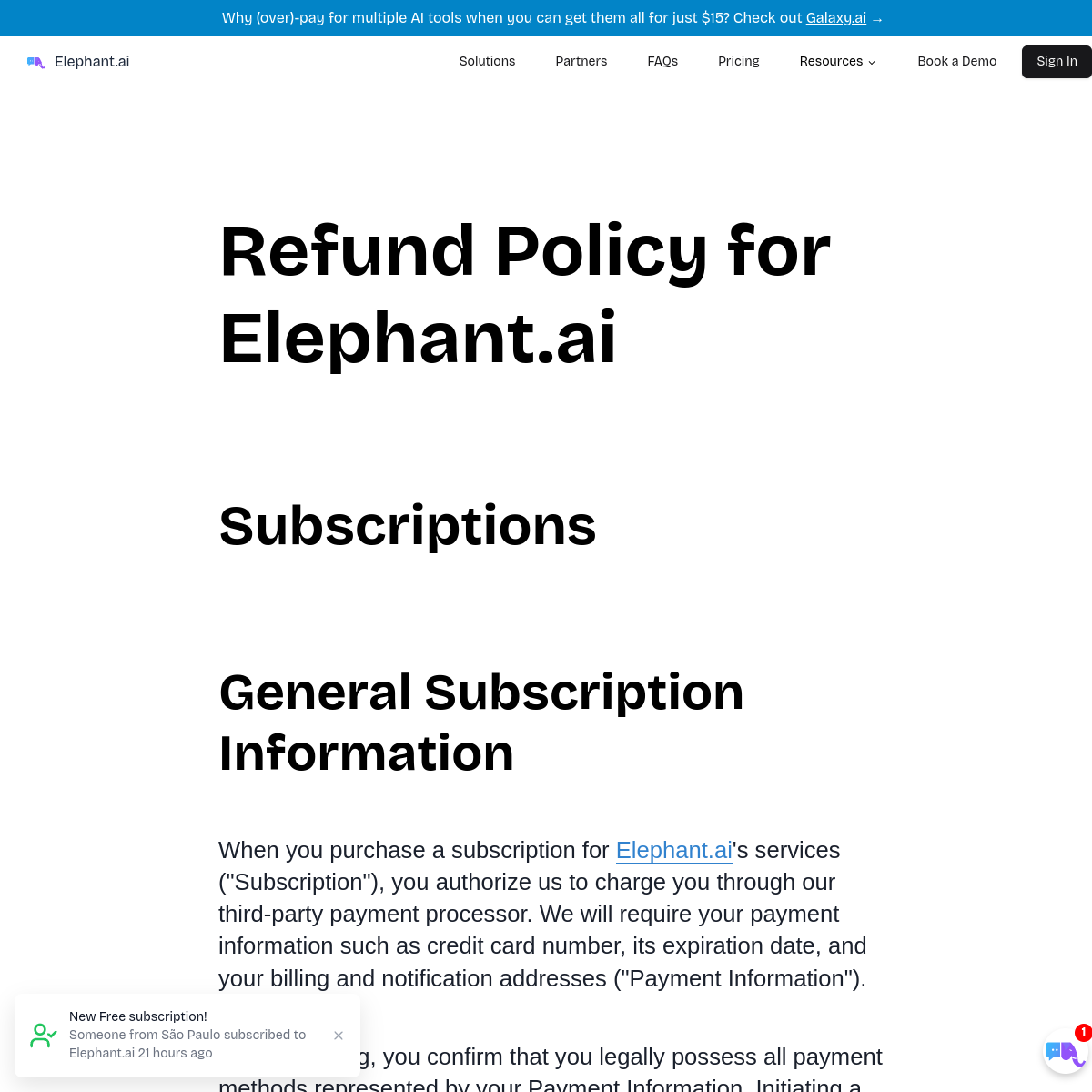
Refund and cancellation rules are where coupon hype goes to die. Before paying, read the refund policy and the terms you’ll agree to, then save those details alongside your receipt. If refunds matter to your decision, confirm what applies to your specific purchase (first-time purchase window, billing cadence, and whether usage affects eligibility) before you commit to a longer cycle.
Once you’re live, treat the assistant like a product feature: review unanswered questions, tighten your sources, and keep your policy pages current. A well-maintained assistant reduces support load; a neglected one increases it.
Seasonality
SaaS discounts can be seasonal, but they’re not guaranteed, and the “always on” savings is still plan fit. You may see stronger promotions around major sales windows like Black Friday/Cyber Week, New Year planning, or product launches. If you’re flexible, it’s reasonable to note today’s baseline and compare later.
If you’re not flexible because support tickets are already eating your time, waiting weeks for a speculative promo can cost more than it saves. Stackable discounts is rarely the play here; operational savings often matter more than a small percentage off.
Alternatives
If Elephant.ai isn’t the right match, compare alternatives based on how you want to deploy (on-site widget vs full helpdesk), how much control you need, and how deeply you want to integrate with sales/support systems.
- Intercom: a broader customer messaging platform with strong automation and support tooling.
- Zendesk: helpdesk-first workflows if tickets and SLAs are your core problem.
- Drift: conversation-led lead capture and B2B-style pipeline focus.
- Tidio: SMB-friendly live chat plus automation, often easier to start quickly.
- Crisp: a chat-first platform with support inbox workflows and integrations.
For a fair comparison, run the same “top 15 customer questions” test across tools and grade answers for accuracy, tone, and escalation. Policy details are the real savings lever, because the cheapest plan is the one you can keep using confidently.

FAQs + operator notes
Q: Is there a working Elephant.ai coupon code right now?
A: As of March 2026, I couldn’t confirm a universal public code that reliably applies to every account. If you receive a promo directly from Elephant.ai or an approved partner, treat it as valid only if it reduces the payable total in the official flow.
Q: What’s the safest way to save without a code?
A: Start with the smallest plan that matches your current usage, stay monthly while you’re still refining content and workflows, and switch to annual only when usage is steady and you’ve proven ROI.
Q: Where do I enter a promo code?
A: Apply it only within the official purchase flow, and only proceed after you see the final total update. If there’s no place to apply it, ask support whether a revised payment link is required.
Q: Should I choose monthly or annual billing?
A: Monthly is typically better for early testing and changing tiers, while annual can be better once you have stable usage and want a lower effective monthly cost.
Q: What should I test before committing?
A: Test your top customer questions, check lead capture and routing, verify tone/accuracy on your key pages, and confirm how you’ll handle “talk to a human” escalations.
Q: What if I outgrow my plan?
A: Plan for growth by tracking usage trends, then upgrade only after you’ve hit limits consistently. Upgrading too early usually costs more than it saves.
Operator notes
Last checked: March 2026
- What was verified: Elephant.ai is positioned as an AI sales assistant for websites, and the official site publishes a pricing page and a refund policy page for buyers to review before purchase.
- What wasn’t verified: any universal public coupon strings, any fixed “limited-time” discount claims from third-party coupon sites, or any guarantee that a promo will apply to every plan/cadence.
- How to verify yourself: start from the official pricing flow, apply any promo you received, confirm the final payable total changes, then save your receipt and the policy terms you agreed to.
